Real Estate Drainage Solutions: Budgeting, Installation, and Maintenance for Property Owners
Introduction: Why Drainage Solutions Matter in Real Estate
Drainage isn’t just a landscaping afterthought—it is a critical system that protects your real estate investment from water damage, soil erosion, and foundation issues. Many property owners underestimate the financial and structural risks posed by inadequate drainage. Flooded basements, waterlogged yards, and foundation cracks can result in repair bills running into the tens of thousands. Whether you’re managing a single-family rental, a multi-unit property, or preparing a home for sale, understanding drainage solutions is essential to safeguarding both property value and tenant satisfaction. In this comprehensive guide, we’ll break down the costs, walk you through installation steps for common drainage systems, and provide actionable maintenance advice. Our aim is to equip you with the knowledge required to make informed decisions—whether you’re a do-it-yourself enthusiast or planning to hire a contractor. Let’s demystify drainage and lay the groundwork for a dry, healthy, and resilient property.
Understanding the Risks: What Poor Drainage Does to Property
Common Problems Linked to Insufficient Drainage
- Foundation Damage: Persistent water pooling near foundations can cause cracks, settlement, and even structural failure.
- Basement Flooding: Water entering below-grade areas leads to costly repairs and mold remediation.
- Landscape Erosion: Uncontrolled runoff washes away topsoil and damages expensive landscaping.
- Mold and Mildew Growth: Damp areas provide an ideal environment for health-hazardous fungi.
- Pest Infestations: Mosquitoes and other pests breed in standing water, increasing tenant complaints and health risks.
Signs Your Property Needs Improved Drainage
- Pooling water after rainstorms
- Cracks in exterior walls or foundation
- Water stains or musty odors in basement/crawlspace
- Spongy, soggy lawn areas that never dry out
Types of Drainage Systems: Choosing the Right Solution
Surface Drainage Systems
Surface systems quickly move water away from problem areas. These include:
- Grading: Adjusting soil slopes to direct water flow away from structures.
- Swales: Shallow, vegetated channels that guide water to a safe discharge point.
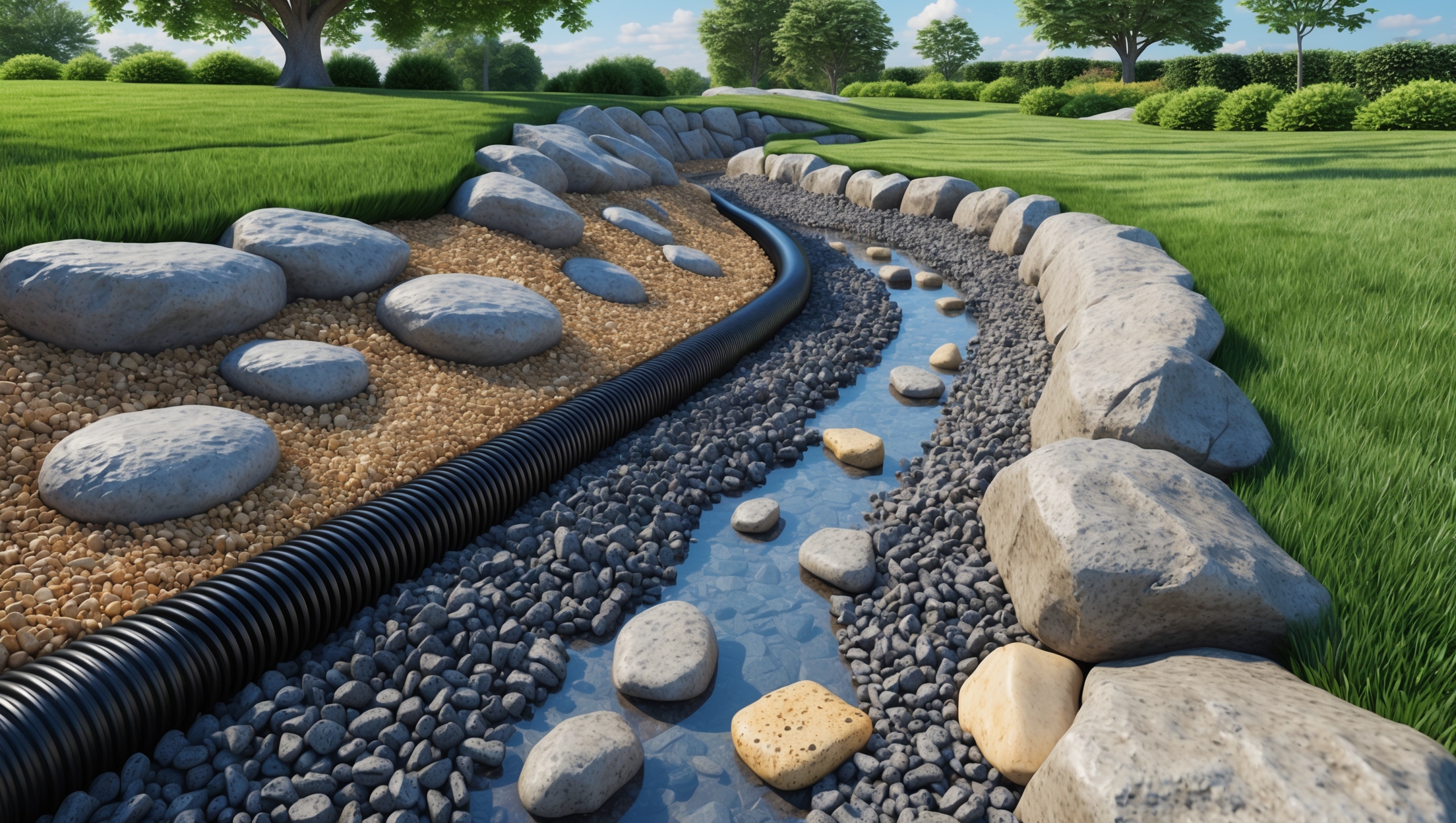
- Dry Creek Beds: Decorative, rock-lined ditches mimicking natural streams.
Subsurface (French) Drainage Systems
French drains and similar buried solutions collect and redirect groundwater before it impacts structures.
- French Drains: Trenches filled with gravel and perforated pipe, ideal for intercepting groundwater.
- Trench Drains: Surface-level channels with grates, often used in driveways or patios.
- Catch Basins: Underground reservoirs that collect surface water and connect to pipes for removal.
Downspout Extensions & Gutter Management
Ensuring roof runoff is safely carried away from the foundation is an often-overlooked drainage priority.
- Downspout Extensions: Flexible or rigid piping that moves water far from the building.
- Rain Barrels: Capture and reuse roof runoff, reducing erosion and water bills.
Budgeting for Drainage: What to Expect
Cost Breakdown by System Type
- Grading and Swales: $1,000–$4,000 for basic regrading; complex projects can exceed $10,000 depending on lot size and accessibility.
- French Drains: $2,000–$6,000 for 50–100 linear feet; costs increase with depth, obstructions, or landscaping restoration needs.
- Trench Drains: $70–$150 per linear foot installed, higher for decorative or heavy-duty systems.
- Catch Basins: $200–$600 per basin, plus installation costs for connecting pipework.
- Downspout Extensions: $15–$50 for DIY kits; $200–$500 if professionally buried and extended.
- Dry Creek Beds: $1,500–$6,000 depending on length, stone choice, and site prep.
Factors Impacting Costs
- Soil Type: Clay soils require more intensive solutions than sandy soils.
- Access: Tight spaces or mature landscaping increase labor costs.
- Permits: Some municipalities require grading or stormwater permits, adding fees and time.
- Disposal: Hauling away excavated soil may add to your budget.
DIY vs. Professional Installation: Cost Considerations
DIY installation can save on labor but risks expensive mistakes. For example, improper slope in a French drain can render it useless, while damaging utility lines can add major repair costs. Professional installers often include warranties and liability coverage.
Step-by-Step: Installing a French Drain
Step 1: Planning and Permitting
- Map out problem areas and identify the lowest points in your yard.
- Call 811 to locate underground utilities.
- Check for any required municipal permits.
Step 2: Excavation
- Mark the trench route with spray paint or flags.
- Excavate a trench 18–24 inches deep and 12 inches wide.
- Keep the trench sloped away from structures (1% minimum grade—about 1 inch drop every 8 feet).
Step 3: Installing the Drainage System
- Line trench with landscape fabric to prevent soil infiltration.
- Add 2–3 inches of gravel to the trench bottom.
- Lay in perforated pipe with holes facing down.
- Cover pipe with more gravel (at least 3–4 inches above pipe).
- Wrap fabric over the top of gravel to keep soil out.
- Backfill with soil and reseed or restore landscaping as needed.
Step 4: Connecting and Discharging
- Ensure the drain outlets at a safe distance from foundations and neighboring properties.
- Use pop-up emitters or daylight the pipe to a sloped area.
Ongoing Maintenance: Keeping Your Drainage Functional
Inspection Checklist
- Check for standing water after storms.
- Inspect downspouts and extensions for clogs or disconnects.
- Look for signs of erosion or exposed piping.
- Remove debris from catch basins, grates, and dry creek beds.
French Drain Maintenance
- Flush system annually with a garden hose to clear sediment.
- Remove invasive roots near the trench.
- Monitor for sinkholes, which may indicate pipe collapse or blockage.
Gutter and Downspout Upkeep
- Clean gutters twice a year to prevent overflow.
- Ensure downspout extensions remain securely attached and sloped away from the house.
Case Study: Drainage Upgrade in a Multi-Unit Rental Property
Consider a 12-unit garden-style apartment complex in a region prone to heavy spring rains. The property experienced frequent basement flooding and tenant complaints. The owner invested $18,000 in a combination of grading, French drains, and new downspout extensions. Post-upgrade, insurance claims for water damage dropped to zero, and tenant satisfaction scores rose, resulting in increased lease renewals and reduced turnover costs. The ROI was realized in under four years through avoided repairs and higher rents. This case illustrates the financial and operational benefits of proactive drainage management in real estate portfolios.
Compliance and Environmental Considerations
Local Regulations
Many municipalities regulate stormwater discharge, particularly for larger properties. Always check local rules regarding:
- Permitted discharge points
- Required setbacks from property lines
- Limits on impervious surfaces
Eco-Friendly Drainage Solutions
- Rain Gardens: Planted depressions that absorb runoff and filter pollutants.
- Permeable Pavers: Allow water to drain through driveways and patios, reducing runoff.
- Native Plant Swales: Require less irrigation and reduce erosion.
These approaches not only help with permits but can also qualify for local tax credits or rebates.
When to Call a Professional: Red Flags and Specialist Needs
- Persistent flooding after multiple DIY fixes
- Foundation cracks or shifting
- Evidence of mold or structural water intrusion
- Complex properties with multiple low areas or large hardscapes
- Projects requiring excavation near utilities or property lines
Professional drainage contractors can provide soil analysis, laser-guided grading, and engineered solutions with warranties—often saving money in the long run by preventing expensive mistakes.
Conclusion: Protecting Your Investment with Proactive Drainage
Drainage is an often-overlooked yet vital component of real estate ownership. Proactive investment in proper drainage systems is not just about preventing puddles—it’s about safeguarding property value, minimizing insurance claims, and ensuring a healthy living environment for residents or tenants. The right solution, whether as simple as regrading a lawn or as intricate as installing a French drain network, depends on your property’s unique characteristics and budget. Regular inspections and maintenance are the keys to long-term performance and peace of mind. Understanding local regulations and exploring eco-friendly options can add further value and even unlock savings through incentives.
Don’t wait for water damage to force your hand. Assess your property today, budget realistically for improvements, and consult with professionals when issues are beyond a simple DIY fix. By taking a strategic approach to drainage, you not only prevent costly repairs but also position your real estate asset for lasting performance and appreciation. Remember, the best time to solve a drainage problem is before it damages your investment. Make drainage management a cornerstone of your real estate strategy for years of trouble-free ownership.